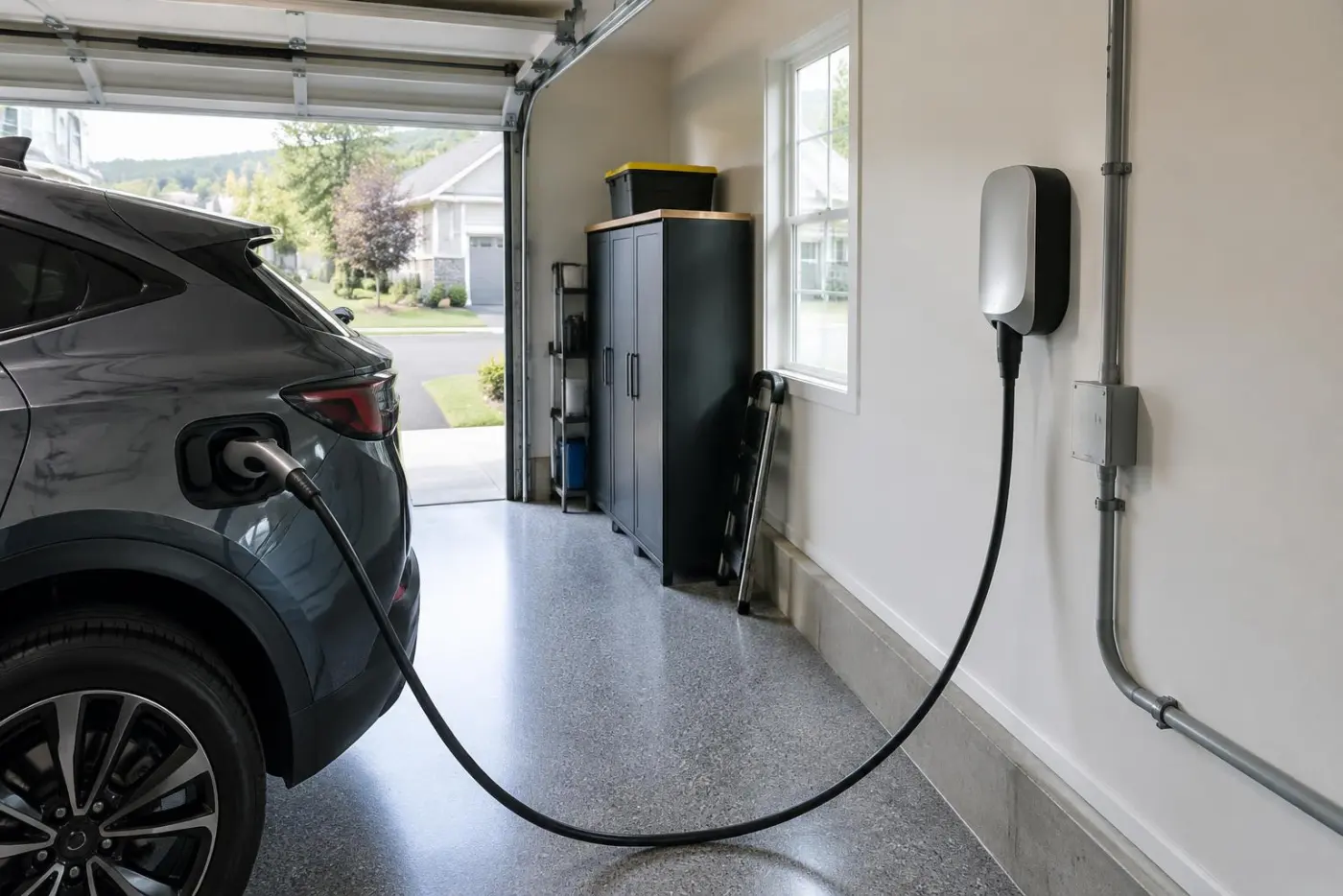
Bought an electric car or thinking about it? Here's what you need to know before you install a home charger.
Level 1 vs Level 2
Level 1 uses a standard 120-volt outlet and adds only a few miles of range per hour. It works if you drive very little. Level 2 runs on 240 volts and typically adds 20–40 miles per hour, which is what most EV owners end up wanting.
Can your panel handle it?
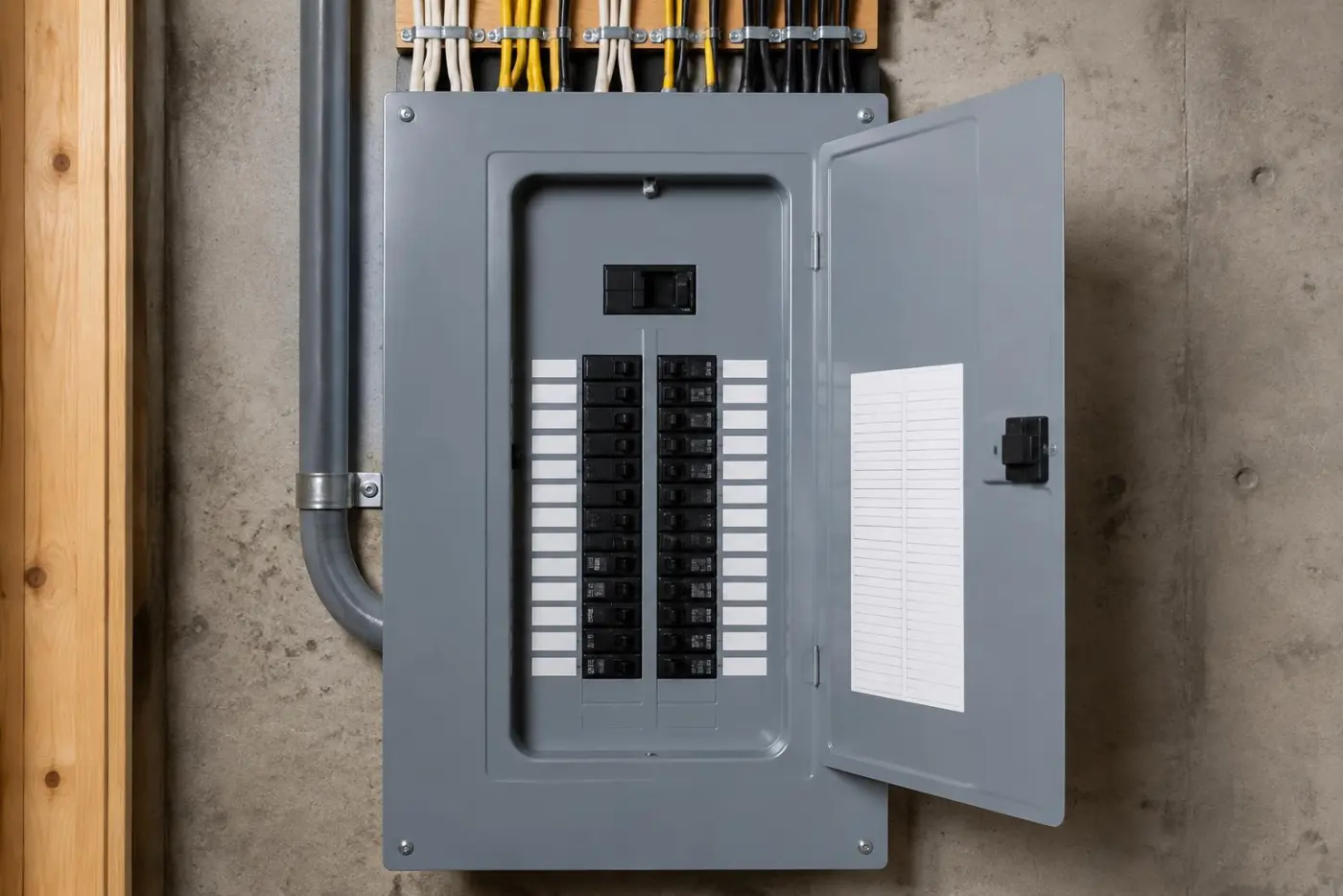
A Level 2 charger usually needs a 40- or 50-amp circuit. Before quoting, we run a load calculation on your home's existing service. If capacity is tight, there are options: a smaller circuit, a load-management device that shares power with other appliances, or a service upgrade.
Plug-in or hard-wired?
A NEMA 14-50 outlet lets you plug in and take the charger with you if you move. Hard-wiring is often cleaner, allows higher power on some chargers, and avoids wear on the outlet. Both must be installed on a properly sized dedicated circuit.
What does it cost?
In our area most installs land between $850 and $2,200 for labor and materials, depending mainly on the distance from the panel to the charger. The charger itself is usually separate. Use our cost estimator for a ballpark.
Incentives
Utility and tax incentives change often. Check your utility's current programs and speak with a tax professional. We'll provide an itemized invoice with the equipment details you may need.
See our EV charger installation service.
This article is general information, not a substitute for an on-site assessment by a qualified electrician. See our disclaimer.